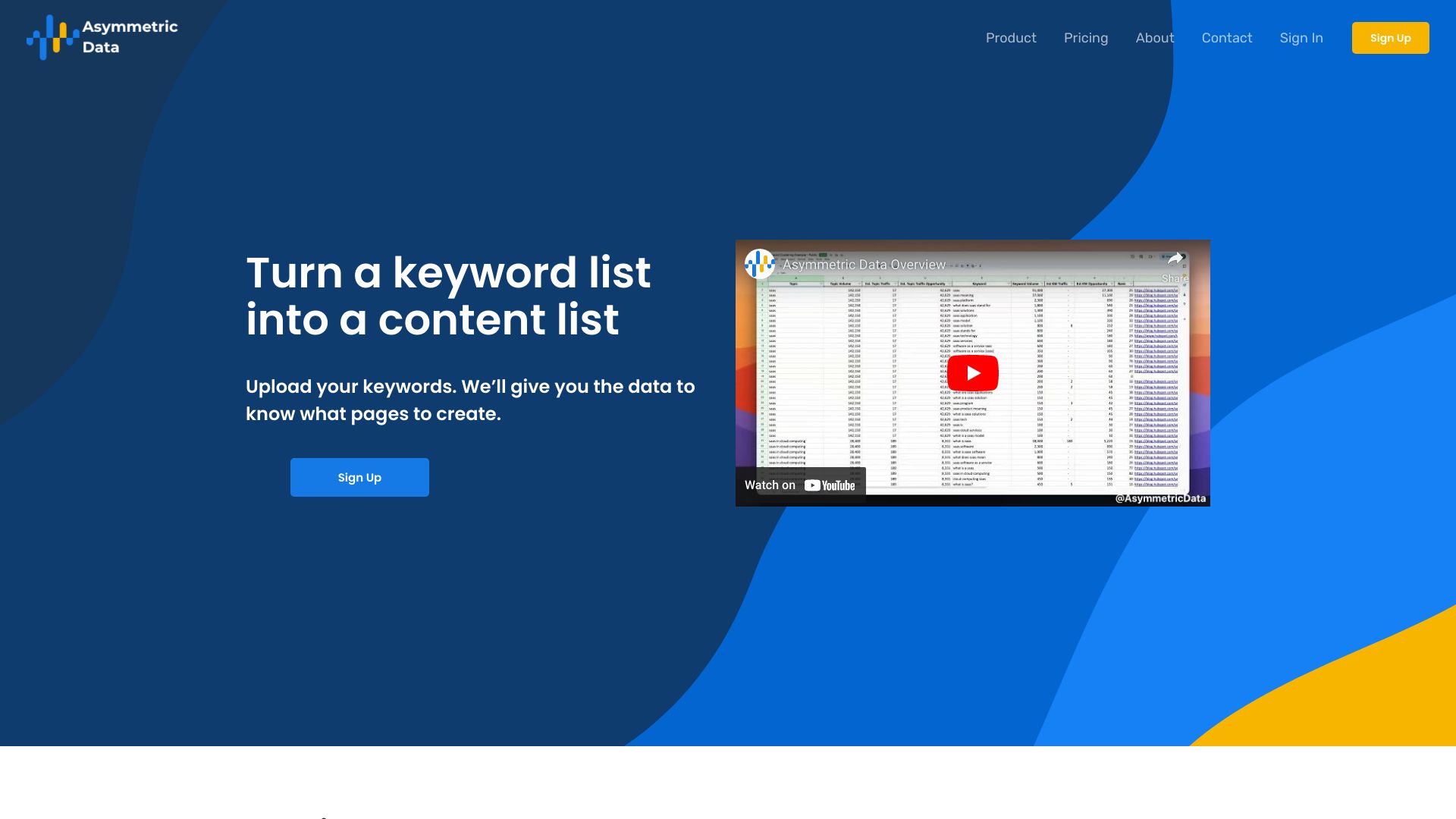
Asymmetric Data
Asymmetric data refers to data that does not follow a symmetric distribution,.
Asymmetric data refers to data that does not follow a symmetric distribution, where the left and right sides of the distribution are not mirror images of each other. This type of data is common in various fields, including finance, economics, and social sciences. Asymmetric Data is a tool designed for professionals who work with asymmetric data sets, providing them with the necessary tools to analyze and understand the underlying patterns and trends.
Asymmetric Data works by employing advanced statistical techniques to identify and quantify the asymmetry in the data. It provides key capabilities such as data visualization, distribution fitting, and statistical modeling, which enable users to gain insights into the underlying structure of the data. The tool also offers features like data transformation and normalization, which help to mitigate the effects of asymmetry and improve the accuracy of analysis.
Data analysts, researchers, and business professionals who work with asymmetric data sets can benefit the most from Asymmetric Data. The tool helps them to uncover hidden patterns, identify potential biases, and make more informed decisions. By providing a comprehensive understanding of asymmetric data, Asymmetric Data enables users to develop more effective strategies and improve their overall performance.